

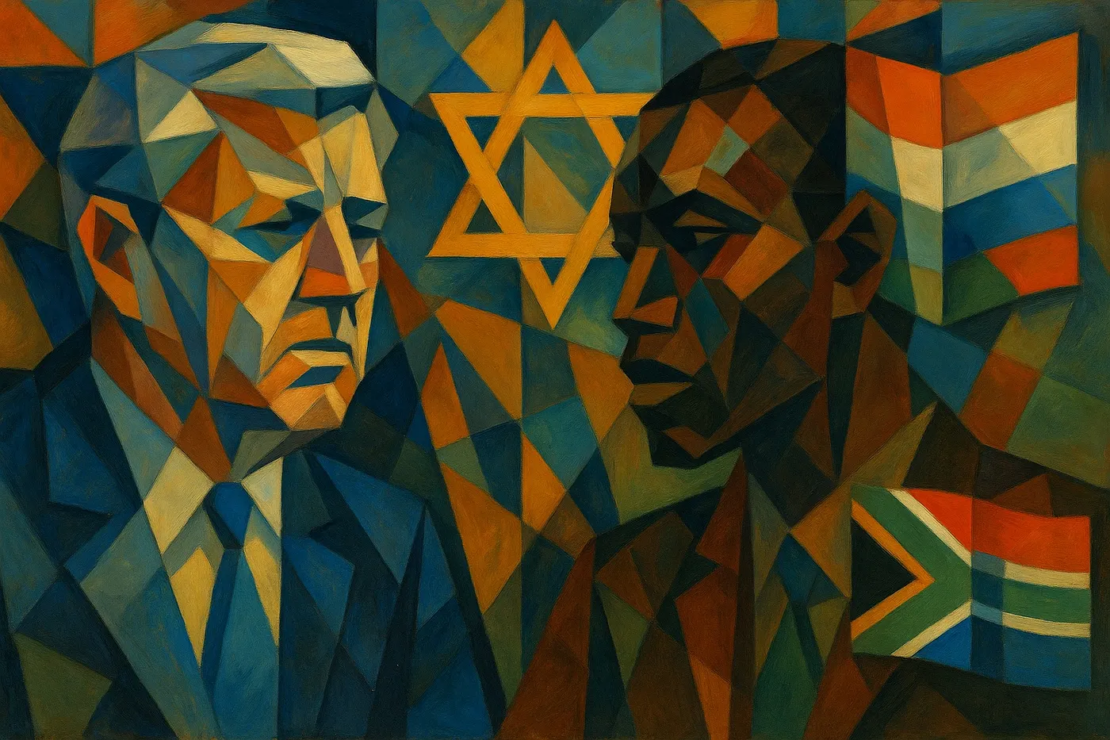
When South Africa Condemns Israel, It’s an “Enemy.” When Europe Does, It’s a Debate.
Louisiana Republican Senator John Kennedy and President Donald Trump are suddenly very concerned about foreign enemies.
Specifically, South Africa.
According to this new strain of American political theater, a country becomes an “enemy” the moment it uses international law to question Israel’s conduct in Gaza. No missiles. No sanctions. No broken relations. Just a filing at the International Court of Justice.
Enemy behavior, apparently.
Except here’s the problem with that claim.
Northern European countries are doing exactly what South Africa did — in some cases, going further — and they are not being punished or demonized.
Not by Kennedy.
Not by Trump.
Not by the rest of the chest-thumping crowd suddenly pretending to care about diplomatic norms.
Which tells us something important.
This was never about Israel alone.
It was about who is allowed to speak with authority and who is expected to stay quiet.
Europe Is Doing the Same Thing. Louder.
Let’s start with the facts Republicans keep stepping around.
Several Northern and Western European countries have openly criticized Israel’s actions, questioned their legality, and taken steps that go beyond what South Africa has done.
- Ireland has accused Israel of violating international humanitarian law and has been among the most vocal critics.
- Spain and Norway formally recognized Palestine and condemned Israel’s conduct in Gaza.
- Belgium has called for sanctions and accountability.
- The Netherlands, through its courts, ordered restrictions on arms exports to Israel.
- Sweden has repeatedly condemned civilian casualties and settlement expansion.
These are not rogue states.
They are NATO members.
EU partners.
Close U.S. allies.
And yet, no one is calling Ireland an enemy.
No threats against Norway.
No hearings about Belgium’s “hostility.”
Instead, we’re told these are “friends having a disagreement.”
Funny how that works.
Same Action. Very Different Reaction.
South Africa did not:
- Declare war
- Impose sanctions
- Break diplomatic relations
- Encourage violence
South Africa did something profoundly threatening to fragile power structures: it used international law.
It brought a case to the ICJ under the Genocide Convention, a treaty the United States helped shape and claims to uphold.
That’s it.
The difference is not the action.
The difference is the actor.
The Real Offense: Moral Authority From the “Wrong” Place
South Africa’s post-apartheid identity matters here, whether Kennedy admits it or not.
This is a country whose modern foreign policy is shaped by:
- Surviving a globally condemned system of racial domination
- Being told for decades to wait, compromise, and be patient
- Ultimately, seeing apartheid itself condemned — and the anti-apartheid movement vindicated — by international law and global pressure.
South Africa knows this terrain intimately. It recognizes it.
When it speaks about civilian suffering, occupation, or state violence, it does so with institutional memory — not cable-news talking points.
And that’s precisely what makes certain American politicians furious.
Because moral authority from the Global South is treated as Black folks being uppity and insubordinate. Not sovereign.
Europe can criticize.
Europe can debate.
Europe can moralize.
But South Africa?
South Africa is expected to remember its place.
Performative Outrage Is the Whole Point
Senator Kennedy’s outburst wasn’t foreign policy.
Trump’s rage-bait comments aren’t strategy.
This is domestic performance, not diplomacy.
Calling South Africa an “enemy” accomplishes three things:
- Signals loyalty to a hardline pro-Israel base
- Punishes a Black-led nation for refusing to defer
- Reinforces a racialized hierarchy of who gets to speak seriously about human rights
It costs them nothing.
It requires no evidence.
And it plays beautifully on cable news.
That’s not leadership.
That’s bullshit with a side of grits.
The Rule They’re Enforcing (Without Saying It)
Here’s the unspoken rule at work:
- White, Western countries may criticize Israel — politely.
- Everyone else must stay in their lane.
Break that rule and suddenly:
- International law becomes “hostile.”
- Courts become “biased.”
- Human rights become “terrorist sympathies.”
South Africa didn’t break the law.
It threatened the hierarchy.
Let’s Call It What It Is
Labeling South Africa an enemy is:
- Factually unserious.
- Legally incoherent.
- Historically ignorant.
- Racially coded.
You don’t have to accuse Kennedy or Trump of conscious racism to see the structure at work. The pattern is old. The reaction is predictable. The double standard is glaring.
Northern Europe does the same thing and gets a policy debate.
South Africa does it and gets kicked in the ass.
That tells you everything you need to know.
The Bottom Line
If invoking international law makes a country an enemy, the problem isn’t South Africa.
The problem is that some American politicians are terrified of a world where moral authority isn’t monopolized by the West, and where Black-led nations don’t ask permission before speaking.
That’s not a threat to U.S. security.
It’s a threat to their comfort.
And they’re telling on themselves.